
Chances are you haven’t heard of the Capitol Crawl. But on March 12, 1990, it became a moment that changed the lives of millions of Americans with disabilities.
Over a thousand activists marched and wheeled from the White House to the U.S. Capitol, demanding that Congress pass the Americans with Disabilities Act (ADA).
The ADA prohibits discrimination against people with disabilities, ensuring equal access to jobs, schools, transportation and public spaces.
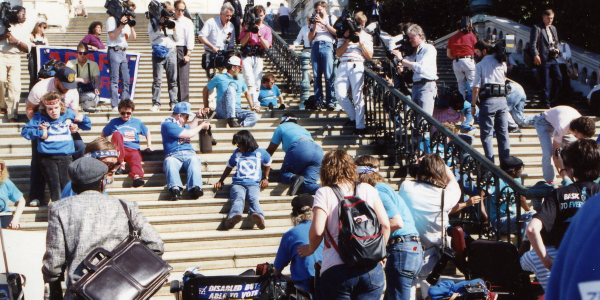
When they reached the Capitol steps, people with disabilities made a bold choice. They left their wheelchairs, canes and other assistive devices behind and crawled up the marble stairs.
Step by step, hand over hand, they revealed the barriers people with disabilities face every day. Every hand on the marble, every inch gained, was a demand to be seen.

The Capitol Crawl made lawmakers and the public confront the realities of inaccessible spaces.
Images of people crawling up the steps ran in newspapers and on television. Just months later, President George H.W. Bush signed the ADA into law, guaranteeing protections and access that had been denied for decades.
For the disability community, the Crawl is a reminder of the power of action. Change comes from showing up and making barriers visible.
For Rhode Island’s service providers and organizations, it is a call to continue the work.
We thank advocates like you who have fought alongside us to create a more inclusive Rhode Island. Your dedication continues the work of those who crawled up the Capitol steps in 1990, showing the world that people with disabilities demand to be seen and included.
Every ramp built, every program made accessible, every barrier removed honors the legacy of people who refused to stay invisible.